
Finding a hidden leak
Tell us where you see water or hear it running when every tap is off, and the plumber you hire tracks down the leak before any wall is cut.
Water bills that creep up, ceiling stains and damp floor patches are reasons to look for a hidden leak. Call and say where you notice it, and a plumber locates the source and repairs it.
Below are how leaks get located, the Toms River water system that serves most of the township, and when repairing a leak needs a permit.
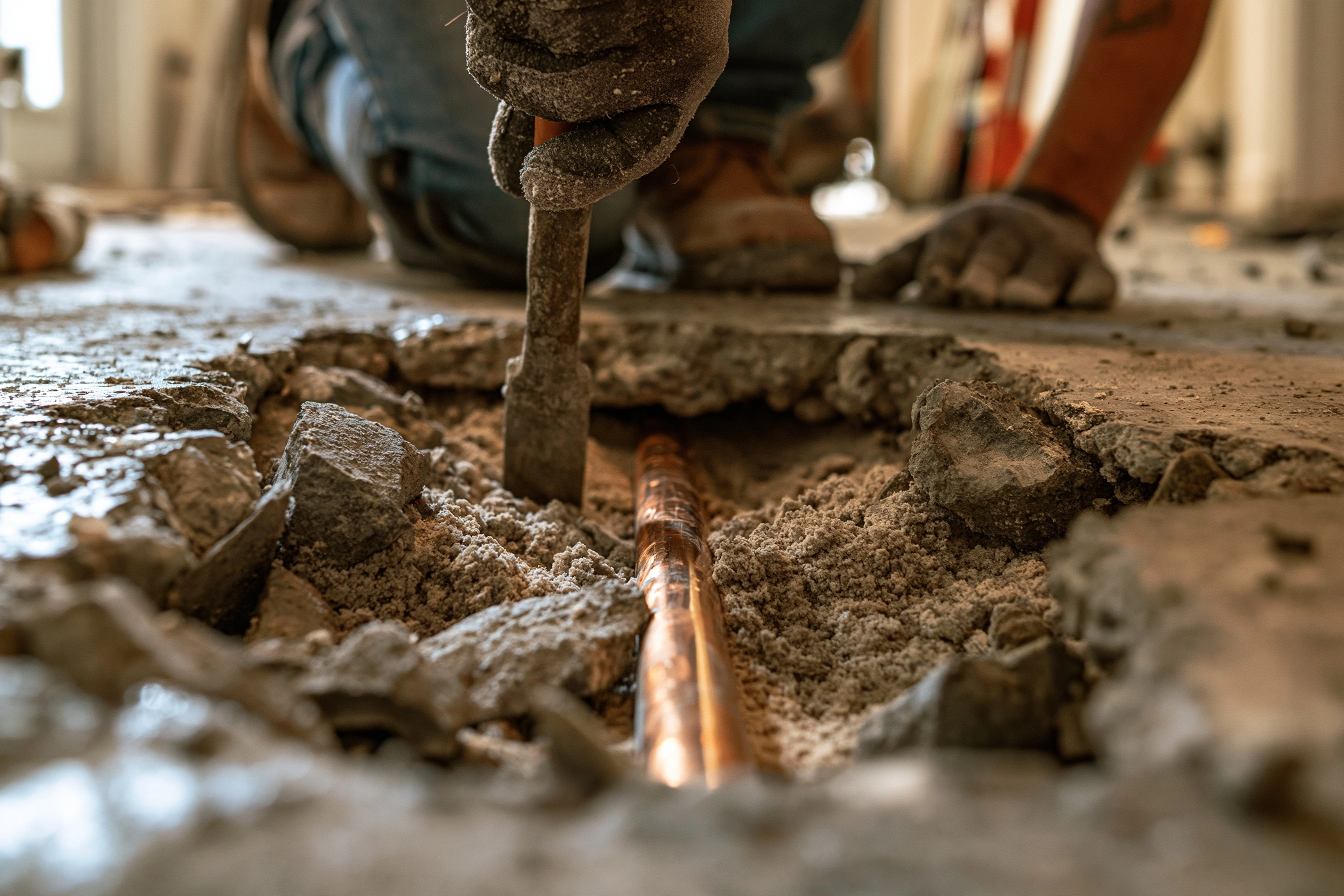
Tell us where you see water or hear it running when every tap is off, and the plumber you hire tracks down the leak before any wall is cut.
Stains show where water arrived, not always where it started. The plumber traces the moisture back to its source and opens only as much wall or ceiling as that takes.
Leaks beneath a floor or concrete slab are located with tools that hear or trace the pipe. The repair then goes in through a small opening where the line allows.
A pressure drop or a soggy patch of yard can mean the pipe carrying water into the house is leaking. The plumber locates the spot before any digging begins.
Veolia Water New Jersey’s Toms River system, which serves most of the township, has about 50,000 connections and draws groundwater from wells that tap three aquifers.
On the house side, the water bill is one place a hidden leak can show up, since the meter keeps counting water that goes nowhere.
Fixing a leak by swapping in a length of pipe is ordinary maintenance under the state code, so the township needs no permit, inspection or notice. Replacing piping more broadly is a different matter, and the repiping page covers it.
Several pipes giving trouble at once is a repiping question, and a leak that cannot wait is emergency plumbing. The remaining services are on the homepage.
Call us to discuss your current issue and how we can assist you. The call is free and you get a free, personalized estimate with no obligation. We're here to help.
Call (855) 321-3426