
Tank repairs
A tank heater with a leaking fitting, a failed part or no hot water may only need a repair. The plumber you hire checks the unit and tells you whether repair or replacement makes more sense.
Leaking, cooling or dead heaters are repaired or replaced, and new tank or tankless units go in. Say what yours is doing when you call.
Below are the heater options, how a like capacity replacement gets inspected in Toms River, and sizing the new unit.
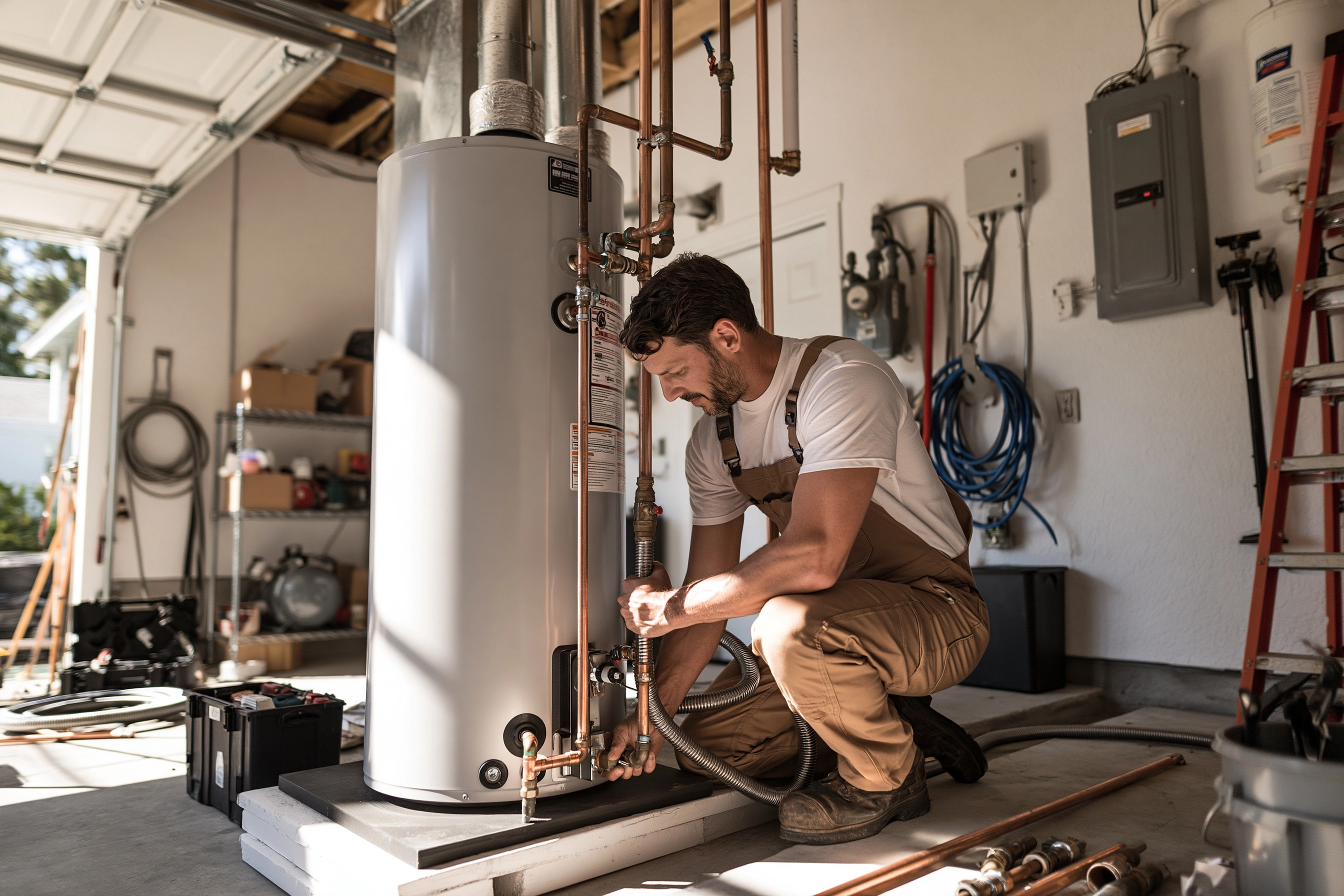
A tank heater with a leaking fitting, a failed part or no hot water may only need a repair. The plumber you hire checks the unit and tells you whether repair or replacement makes more sense.
Putting in a new tank of the same capacity as the old one is a straight replacement, and the state code calls that kind of swap minor work.
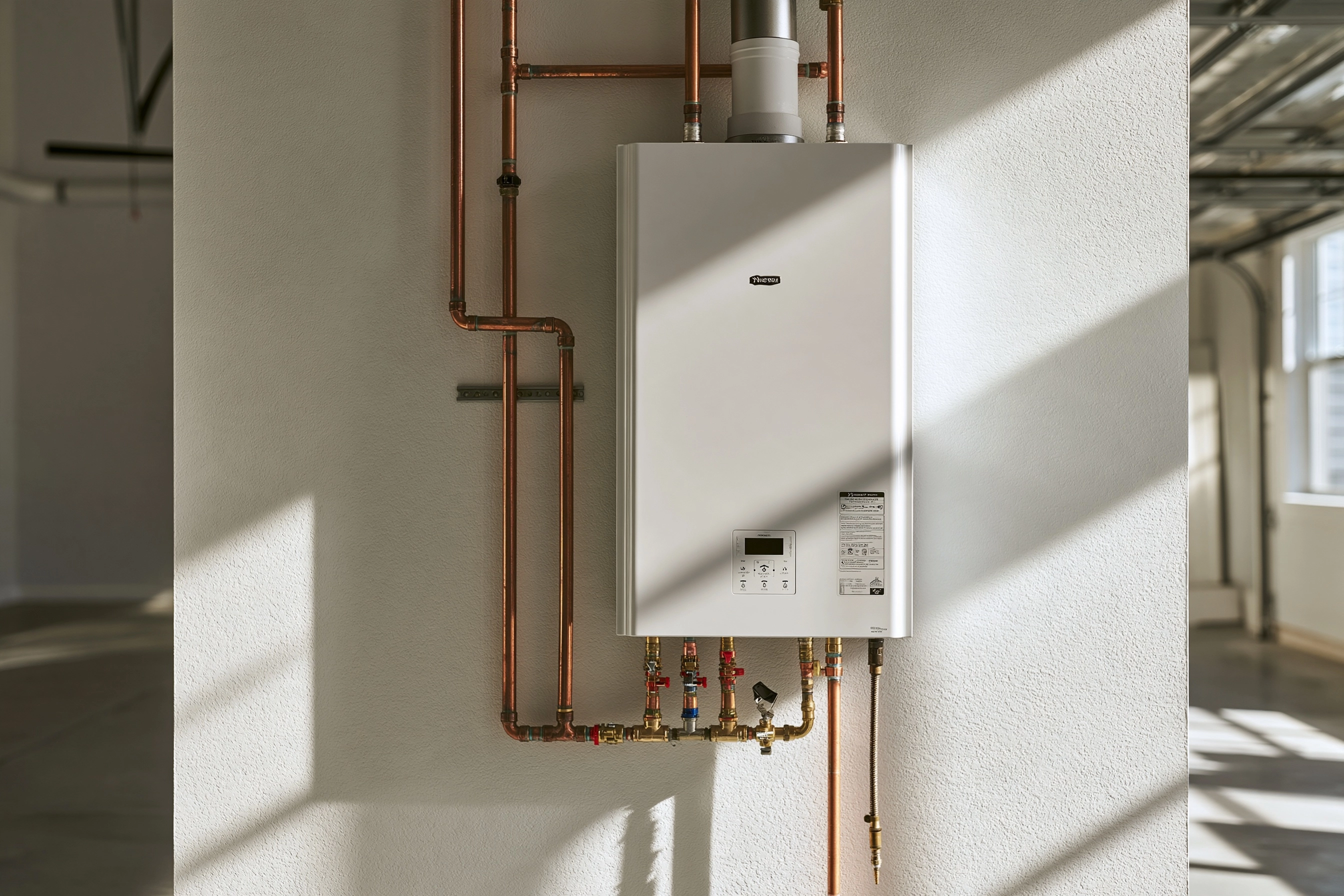
Tankless units heat water as it passes through, so flow rate sets the size instead of tank volume. A switch may bring venting, gas or electrical changes, which the plumber reviews first.
An existing tankless unit that shows an error or gives lukewarm water gets looked at by a plumber who works on tankless heaters. Have the brand and any code on the display ready when you call.
A new water heater of like capacity counts as minor work in the state code. That means a permit, though the work may start once notice reaches the construction office.
The inspection that follows is requested through the Building Department, which now takes inspection requests in writing. Minor work still has to be inspected.
A heater of a different capacity falls outside that rule, so ask the plumber you hire which kind of job yours is.
Tank size follows the household. Enter the people and bathrooms into the water heater size calculator and it picks from 30, 40, 50, 65 and 80 gallons.
Tankless size depends on flow, and the tankless flow calculator places Toms River’s 27°F January low in its 52°F inlet band, which means a 68°F rise to reach 120°F.
Heater age is on the rating plate, where the serial number encodes the build date. Put that number into the serial number decoder and weigh the result when deciding on a repair.
Puddles near the heater are explained under leak detection, and the lines that supply it are explained under repiping. The homepage lists the remaining services, from drains to sewer lines.
Call us to discuss your current issue and how we can assist you. The call is free and you get a free, personalized estimate with no obligation. We're here to help.
Call (855) 321-3426